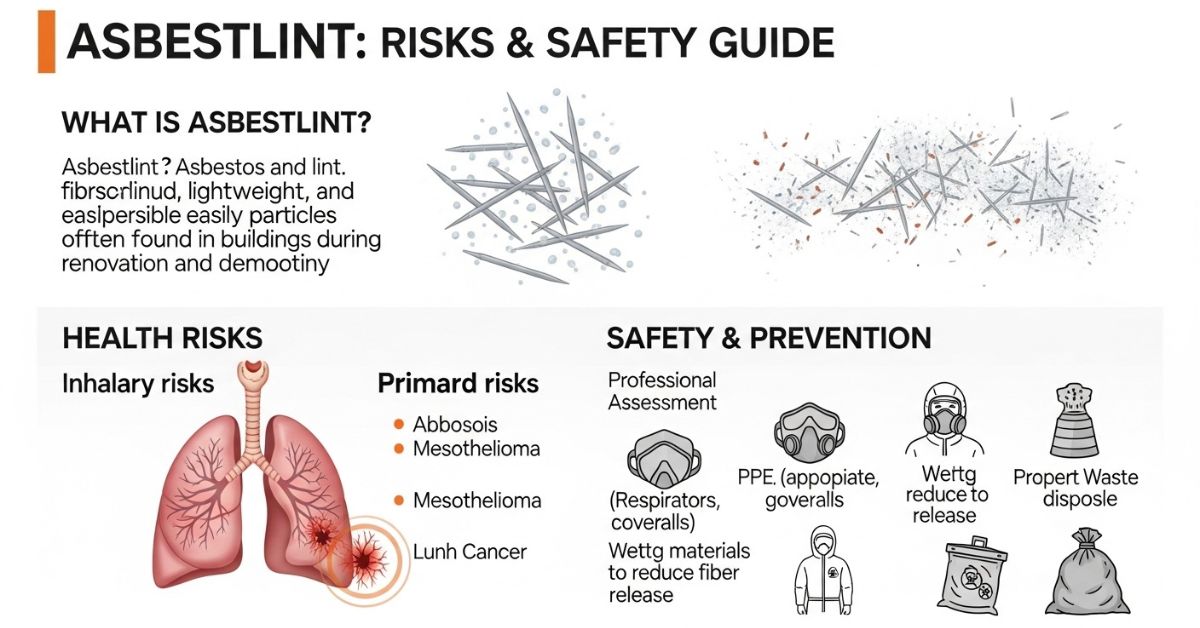
Although the name “asbestlint” may not be immediately familiar, the substance has a heavy past and profound consequences. Due to its unusual qualities, this substance has found usage in different sectors. However, there are substantial health concerns associated with it that should not be overlooked. Find out what asbestos is, where it came from, the risks of exposure, what to do if you come into contact with it, and what laws are in place to safeguard employees and customers. In addition, we will investigate less hazardous options that can stand in for asbestos without lowering standards or performance. In order to make safe and educated decisions, it is vital to understand asbestos, whether you are a construction professional or just interested in the subject. Now, let’s go all in!
The History and Uses of Asbestlint
The use of asbestoslint, more commonly known as asbestos tape, has been around for a very long time. Its heat resistance made it popular throughout the industrial revolution of the nineteenth century, but it had been used by ancient civilisations for much longer.
Producers saw its adaptability immediately. Insulation and building materials relied heavily on asbestos. Its resistance to high temperatures makes it a perfect material for pipe and joint sealing in construction.
Asbestos has uses in the automobile industry as well as the building trade. Its longevity made it ideal for usage as heat shields and gaskets.
But when studies found that asbestlint fibres posed serious health hazards, its extensive use came under fire. Asbestos materials are still found in many older structures today, despite these concerns. Current safety issues and laws governing the usage of this substance can be better understood by gaining an understanding of its historical importance.
Health Risks Associated with Asbestlint Exposure
There are serious health concerns associated with asbestos exposure. There are asbestos fibres in the material, and these can be inhaled if they go airborne. Upon entering the lungs, these little particles gradually wreak havoc.
Respiratory problems can occur in those who are exposed to asbestlint. Chest discomfort, shortness of breath, and coughing are common symptoms. The onset of these symptoms may take place years following exposure.
As time goes on, the symptoms become worse. Mesothelioma is an extremely uncommon malignancy that affects the lining of the lungs, and asbestosis is one of the illnesses associated with asbestos.
The health impacts of even brief contacts can be long-lasting. Everyone who comes into contact with asbestos must be completely aware of the risks.
Renovating a home using this material can be just as dangerous as working in an industrial setting. Being aware is crucial for efficiently controlling potential exposure.
Safety Precautions for Handling Asbestlint
Prioritise safety measures if dealing with asbestos. It is crucial to have the right protection gear. Wearing protective gear such as disposable coveralls and a respirator will help keep you safe from breathing in dangerous fibres.
Make sure there is adequate ventilation in the work area. Ensure that only authorised personnel are granted access. Minimising exposure hazards can be achieved by maintaining a clean and organised space.
To handle asbestos properly, you must need specialised equipment. Stay away from power equipment that might produce dust. Materials can be wetted to decrease particulate matter in the air.
Follow all applicable local restrictions before disposing of trash. To properly identify and store potentially dangerous materials, use airtight containers or bags.
All employees who come into contact with asbestos should get regular training to ensure they are up-to-date on safety protocols and emergency procedures. You may greatly reduce the dangers connected with this hazardous item by implementing these measures.
You May Like:ECMISS : Meaning, Digital Trends & Guide
Government Regulations and Laws regarding Asbestlint
For the sake of public safety, government rules concerning asbestos are paramount. Strict regulations have been put in place by some nations to safeguard workers and reduce exposure.
Regulating asbestos in the US is overseen by the Environmental Protection Agency (EPA). Proper handling methods are required since they are classified as asbestos, a hazardous substance. This entails routine inspections of older structures and removal protocols on construction sites.
Since 2005, the European Union has taken a strong stand against asbestos by outlawing its usage in any form. In order to prevent any possible hazards related to asbestos, member nations have enacted strict regulations.
Another important role is that of local governments, which are able to create laws that are more suited to the interests of their respective communities. Those who work with asbestos-containing products are often required to undergo special training.
For the sake of both employee and environmental safety, it is critical that these rules be followed. Making ensuring everyone stays safe from this harmful substance requires being aware of one’s legal responsibilities.
Alternatives to Asbestlint Products
Many sectors are looking for safer replacements to asbestlint as worries about it keep growing. Fibreglass tape is a typical alternative. There are no known health hazards, and it has outstanding insulating characteristics.
Another choice is sealants made of polyurethane foam. These products are great for closing up spaces where air or moisture might get in since they stretch to fit any surface.
Rubber membranes are becoming more common for use in roofing. They make the workplace safer and last through severe weather conditions.
There are other non-toxic options that are kind to the environment, such as items made from recycled paper or cellulose fibre. Both human and environmental health are safeguarded by these decisions.
Construction and manufacturing operations may remain compliant with rules and uphold quality standards by opting for safer choices. Investigating these options can result in fresh approaches that put an emphasis on security without sacrificing efficiency.
Conclusion
Although asbestlint was formerly widely used due to its strength and fire resistance, it now presents serious health dangers that should not be disregarded. Everyone who might come into touch with this substance must be aware of these hazards. Additional mitigation of dangers can be achieved by familiarising oneself with the safety protocols for asbestos handling.
Because of the grave dangers associated with asbestlint exposure, the government has enacted strict laws around the substance. To ensure the safety of employees and members of the public, it is essential to follow these regulations.
A number of asbestlint substitutes have been available in recent years, thanks to the increased focus on health and safety. These alternatives frequently offer the same or comparable advantages without the risks.
Asbestos was formerly ubiquitous in many sectors; thus, it is critical to be aware about the material, its applications, hazards, safety precautions, and legal ramifications in order to promote safer settings.
Read More:ECMISS : Meaning, Digital Trends & Guide