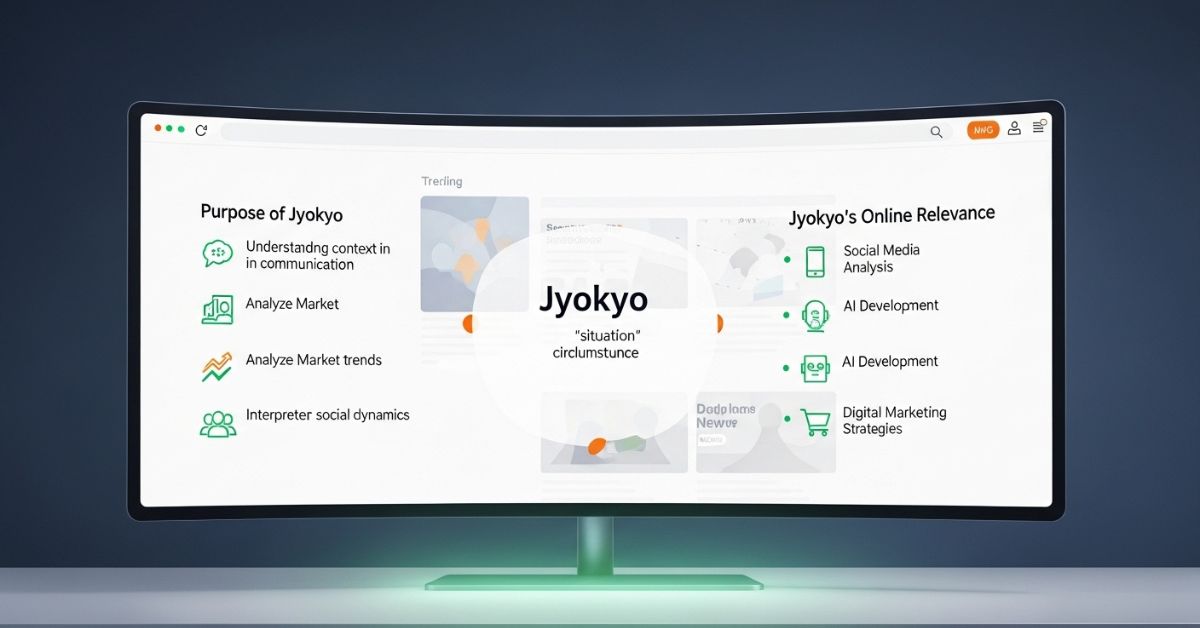
Have you ever been in a social setting when you weren’t sure what to do or say? The peculiar Japanese idea of “jyokyo” may provide the missing piece to the puzzle that is these instances. Although literally translated as “situation” or “circumstance,” the Japanese term it captures the nuanced nature of social interactions and expectations in the country. Learning jyokyo can improve your social skills and open your eyes to the Japanese way of life. Together, let’s delve into this intriguing idea and uncover all of its intricacies!
The Origin and History of Jyokyo
In Japanese culture and language, the term “jyokyo” is strongly ingrained. Derived from the combination of the Japanese words “jō” meaning “situation” and “kyo” meaning “condition,” it signifies more than only a physical state.
The concepts of social peace and community values held by the Japanese have long influenced jyokyo. Understanding one’s environment and adjusting one’s conduct appropriately are central to these ideas. The meaning of it changed as time went on, much as society itself.
Recognizing the subtleties of each circumstance is crucial for upholding respect and propriety in traditional contexts, including tea ceremonies or family reunions. These traditions have an impact on how people interact now in all sorts of settings, from formal business meetings to more relaxed social gatherings, demonstrating how Japan’s past behaviors shape its present social dynamics. As a reflection of societal developments, It has evolved through the years while maintaining its essential relevance for people going about their everyday lives.
How Jyokyo Affects Daily Life in Japan
Jyokyo is a powerful yet understated idea that is present in Japanese culture and daily life. It molds the way individuals engage with one another and their surroundings. Maintaining peace becomes absolutely dependent on comprehending the circumstance.
Consider, for example, a business setting. Prior to speaking up at meetings, employees frequently assess the environment and mood. Conflict may be avoided and cooperation can be promoted by reading between the lines.
Another area where jyokyo is evident is in social events. A welcoming environment is created when people adapt their actions in response to the signals sent by others around them. When words fail, silence speaks volumes.
The same is true for public places. People are considerate of one another’s space and sensitive to the mood of the group whether they are on trains or in parks. This unspoken comprehension cultivates a sense of community.
Because of their high level of emotional intelligence and the importance their culture places on situational awareness, Japanese people are able to deftly negotiate intricate social dynamics.
You May Like:Acamento: Meaning, Uses & Why It Matters in Modern Design
Examples of Jyokyo in Different Situations
Many parts of Japanese life, especially interactions with others, display jyokyo. Meeting attendees read the atmosphere and adapt their communication style accordingly, for instance. Being sensitive like this helps keep the peace.
Public transit is another example. Commuters generally show consideration for one another’s demand for personal space by remaining silent and courteous. These actions demonstrate how jyokyo has an impact on shared experiences through their subtlety.
Jyokyo is also very important in family contexts. To avoid an argument while still teaching their children a valuable lesson about responsibility, parents may opt to communicate their dissatisfaction in a roundabout way.
At more formal events, like festivals or ceremonies, it’s easy to see how individuals adjust their behavior to fit the mood, whether that’s through their choice of clothing or the way they express themselves to others. Jyokyo is a fundamental principle that influences everyday life in Japan; it is a complex dance that is driven by awareness and respect for context.
The Benefits and Drawbacks of Embracing Jyokyo
A new outlook on life may be brought about by embracing jyokyo. As a result, people are more likely to pay attention to the finer details of their environment. This self-awareness encourages more meaningful relationships with things and people.
Having said that, there are also downsides. Adapting to new situations all the time might make you anxious or unsure of what to do. People may find it difficult to stand steadfast when necessary.
One the one hand, jyokyo teaches you to be adaptable and strong. As a result, people are better able to communicate and negotiate group dynamics.
However, one risk losing touch with who they are and what they stand for if they put too much emphasis on situational awareness. Achieving personal progress requires striking a balance between being authentic and adaptable.
In essence, jyokyo presents opportunities for growth as well as risks that must be carefully managed.
Applying Jyokyo to Your Own Life: Tips and Tricks
To effectively apply jyokyo in your life, start by observing the environment around you. Pay attention to non-verbal cues and social dynamics. This awareness will help you understand how to adapt your behavior accordingly.
Next, practice mindfulness. Being present allows you to gauge situations better and respond appropriately. Take a moment before reacting; this pause can be transformative.
Build relationships based on empathy. Listen actively when others speak, and consider their feelings and perspectives. Strong connections often reflect a deep understanding of the surrounding context.
Embrace flexibility in your daily routines. Adaptability is key to navigating various scenarios with grace. The more you adjust, the easier it becomes to embody the essence of jyokyo in everyday interactions.
Conclusion
Jyokyo is a fascinating notion that sheds light on Japanese culture and its value of context. Everyday interactions in many areas of life, from professional to personal relationships, are shaped by this complex concept.
The art and skill of situational behavior adaptation becomes apparent when you investigate the various manifestations of jyokyo. Finding the right mix between reading social signs and being genuine might result in more fulfilling encounters.
Better communication and deeper relationships are two outcomes that may be achieved by adopting this perspective. But there are also negatives, such as the possibility of being misunderstood or coming across as insincere if it’s overdone.
Applying jyokyo principles in your own life may be easy and fulfilling. You may greatly improve your relationships by being aware of your environment, paying attention to emotional landscapes, and responding appropriately.
By practicing jyokyo and seeing the nuances in every circumstance, we may have richer conversations with others around us and develop stronger relationships with ourselves.
Read More:Acamento: Meaning, Uses & Why It Matters in Modern Design