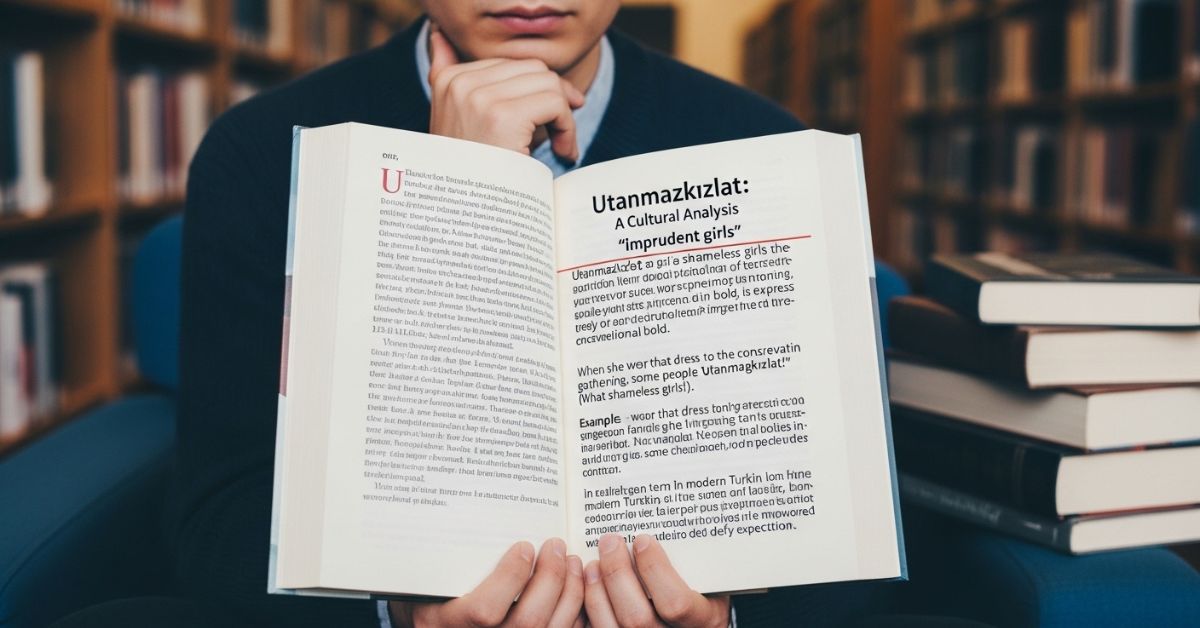
Certain words stand out and start arguments in the dynamic fabric of today’s interactions and social media. This includes the phrase “utanmazkızlat.” This fascinating term has deep cultural origins in Turkey and a profound meaning beyond its literal translation. Knowing what it means is becoming more important as it enters conversations about gender, identity, and social expectations. So, what exactly does “utanmazkızlat” mean? Come with us as we investigate where this intriguing phrase came from, how it is used in modern discourse, and what it means.
Origins and history of the term utanmazkızlat
The cultural and linguistic origins of the phrase “utanmazkızlat” may be traced to Turkey. Two essential components are brought together in it: “utanmaz,” meaning shameless, and “kızlat,” meaning to provoke or instigate shame. They provide a striking picture that mirrors how society views femininity when taken as a whole.
The origin of the phrase may be traced back to historical debates over the proper conduct and societal function of women. The meaning of this term changed as time went on and conventional wisdom changed. Although it was originally meant to be an insult to women who dared to challenge societal norms, it now shows how deeply ingrained the idea of female empowerment is.
A more intricate sign emerged from “utanmazkızlat” as time passed. Although some people still view it negatively, others see it as a badge of honour and a means to regain control of their identities and choices. This change exemplifies how language reflects societal cultural shifts.
Common usage and social context utanmazkızlat
Particularly among the younger generation, utanmazkızlat has become a part of everyday discourse. To describe someone who is fearless and unafraid is a common humorous usage of the word.
The phrase has a dual meaning on social media: it may be both amusing and critical. Someone could be called utanmazkızlat, for example, if they upload an unapologetic selfie or a bold opinion. An air of both adoration and scorn is conveyed by this use.
When you’re in a group, stating “You’re so utanmazkızlat” might make others laugh or even feel closer. But it also begs the question: what is the definition of shamelessness? People start talking about societal norms and personal expression when the phrase is brought up.
The way we use words like utanmazkızlat shows how our perspectives on being genuine and confident in public life change as language develops. It’s a cultural statement encased in humour and intelligence; it’s more than simply a word.
You May Like:orgasamtrix: Guide, Reviews & Key Information
Impact on gender stereotypes and societal norms
Discussions on gender stereotypes give considerable weight to the phrase utanmazkızlat. For women, it is a microcosm of the larger social norms about how they should act and look.
Using it shows that you have a critical view on women who refuse to conform to societal expectations. This designation serves to further the view that modesty and self-control are hallmarks of femininity. People may react negatively if women who are labelled as such speak their minds.
On top of that, this word might set the stage for an atmosphere where women are pushed to comply. People avoid being themselves and uphold detrimental norms of behaviour because they are afraid of reprimand.
Term like utanmazkızlat forces us to reevaluate these long-standing preconceptions as discussions about feminism and empowerment progress. They make us reevaluate our definition of “unapologetically ourselves” and prompt us to contemplate the ways in which language influences our views of gender roles in the modern world.
Controversies surrounding the term utanmazkızlat
There has been a lot of discussion in modern society over the phrase utanmazkızlat. Opponents contend that it perpetuates damaging gender stereotypes around sexuality and feminine behaviour. This term is frequently used in a disparaging way, implying that someone lacks modesty or feels shame.
The term’s proponents argue that it can help women recover their stories and thereby gain agency. They interpret it as a rejection of conventional norms in society. Nevertheless, there is a danger in this empowerment as it may lead to the continuation of negative stereotypes.
The impact of these conversations is magnified by social media. The term’s frequent virality in posts and memes reflects a range of perspectives while also heightening tensions amongst various groups.
The discussion around utanmazkızlat is still evolving as individuals work through these intricacies. In doing so, it reflects larger concerns about cultural views towards women’s autonomy and gender equality.
Evolution of language and its effect on utanmazkızlat
Language evolves through time as a result of societal and cultural influences. “Utanmazkızlat” is a reflection of its ever-changing qualities. The meaning of words changes in tandem with the tides of public opinion.
Perceptions of terminology such as utanmazkızlat have been shaped in recent years by conversations about gender and equality. Things that were formerly stigmatised may be recovered or rethought in contemporary settings.
Online platforms magnify these shifts, opening the door to many understandings. These phrases are commonly used by younger generations in a fun or rebellious way, questioning established conventions.
The effect on individuality of linguistic development is growing. Meanings are shaped and adjusted by individuals according to their personal beliefs about empowerment and self-expression.
The ongoing relevance and vitality of discussions using terms such as utanmazkızlat are maintained by this malleability. Its importance inside different social groups grows with each new use.
Conclusion
Undoubtedly, the phrase utanmazkızlat has changed throughout the years. An intricate web of social mores and cultural mores informed its inception. A criticism on societal gender norms has evolved from a term originally used to denote women’s boldness or shamelessness.
The typical use of this phrase has significant ramifications for our understanding of femininity and assertiveness, as we have shown. Depending on who you ask, it may be both a mark of shame and a badge of honour. We may learn a lot about the present state of gender stereotypes and the fight against outmoded beliefs from the social environment of utenmazkızlat.
This term’s polarising character is shown by the controversy surrounding it. Some think it should be reclaimed for empowering reasons, while others think it reinforces damaging prejudices. Discussions on the power of language to shape our views are mirrored by this duality.
A language’s structure changes as a result of the beliefs and practices of subsequent generations. Words like utanmazkızlat could take on new connotations or even become obsolete if people keep questioning established narratives.
Gaining a grasp of these dynamics provides priceless insight into the current cultural and identity ebb and flow as well as the term itself.